

 Español
 Portuguese
Maintenance and Protection in Sandblasting: How to Extend the Lifespan of Your Equipment and Work Safely
Proper care of sandblasting equipment is just as important as preventing risks to the operator. Therefore, personal protection during application and proper equipment maintenance are essential. Today, we bring you the key guidelines to extend the lifespan of your sandblasting equipment and ensure operator safety.
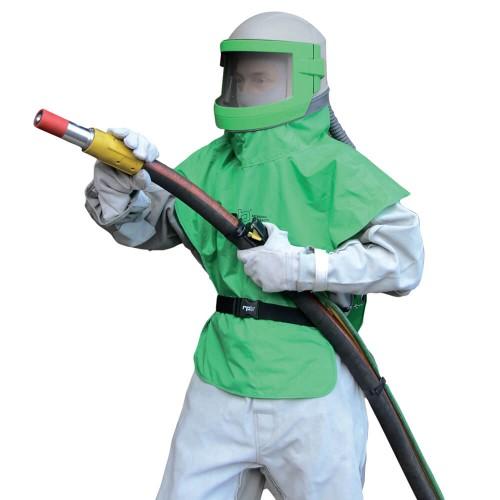
In sandblasting applications, performance does not depend solely on the equipment you use. It directly depends on its maintenance, the condition of its components, and operator protection. Poorly maintained equipment not only loses efficiency but can become a constant issue on site:
- Pressure drops
- Increased abrasive consumption
- Unexpected downtime
- Premature wear
- Safety risks
That is why understanding which components to check and how to properly protect the operator is key to working efficiently, profitably, and safely.
Key Components in Sandblasting Equipment Maintenance
Preventive maintenance is the best way to avoid breakdowns and keep equipment performing at its highest level.
Nozzles are one of the components that suffer the most wear during operation.
They are responsible for directing the abrasive flow and maintaining proper pressure, so their condition directly affects performance.
A worn nozzle causes pressure loss and increased costs. Regular inspection and timely replacement will prevent performance loss.
Key functions:
- Maintain working pressure
- Define blasting pattern
- Optimize abrasive consumption
A critical component that is often overlooked. Sandblasting hoses must withstand high pressure, resist continuous abrasion, and ensure a constant flow. A damaged hose can lead to performance loss and even safety failures.
Key features:
- High pressure resistance
- Abrasion protection
- Flexibility for operation
In sandblasting operations, visibility is essential to achieve a uniform finish. Without proper lighting, the operator cannot accurately detect treated areas, directly affecting the final result.
Problems caused by poor lighting:
- Untreated areas
- Overblasting in certain areas
- Increased abrasive consumption
- Operator fatigue
External lighting systems
- Improved overall visibility
- Reduced shadows
- Better process control
Operator Protection: Essential in Sandblasting Work
Sandblasting is a demanding application that requires specific safety measures.
Sandblasting Helmets
Helmets protect the operator from particles, dust, and abrasion.
Benefits:
- Full head and respiratory protection
- Clean air supply during operation
- Greater comfort during long working hours
Air Filtration Systems
The air the operator breathes must be safe.
Function:
- Remove particles
- Reduce moisture
- Ensure clean air
Personal Protective Equipment (PPE)
Safety is not optional in this type of work.
Required equipment:
- Protective suits
- Specialized gloves
- Hearing protection
Proper maintenance combined with adequate protection systems allows you to:
- Maintain real working pressure
- Reduce abrasive consumption
- Prevent breakdowns
- Extend equipment lifespan
- Improve operator safety
In short, maintenance and protection are not a cost, but a direct investment in productivity, safety, and profitability. If you want to improve your equipment performance and work safely, it is essential to regularly check each component and use the right systems.
At Jomar you will find everything you need for sandblasting maintenance and protection, along with specialized technical support to help you choose the best solution.
Share on

