
 Español
 Portuguese
5 Mistakes That Reduce the Performance of Your Abrasive Blasting Equipment
An abrasive blasting system can be in perfect condition and yet fail to deliver the expected performance. Lack of power, excessive abrasive consumption, blockages, pressure drops or excessively slow cleaning do not necessarily mean that there is a fault with the blasting machine.
A blasting system involves numerous components, all of which must work together in a balanced way: compressor, compressed air flow and quality, blasting machine, abrasive, nozzle, pressure and equipment configuration.
An error in any of these areas can directly affect productivity and the results achieved on the surface.
Therefore, before assuming that the problem lies with the machine, it is important to check the entire installation.
In this article, we analyse 5 common mistakes that can reduce the performance of abrasive blasting equipment and the key aspects to consider in order to avoid them.
1. Not Paying Enough Attention to Compressed Air
Compressed air is one of the fundamental elements of any abrasive blasting system.
It is common to focus mainly on compressor pressure, but bar pressure is not the only important factor. To maintain continuous blasting, the compressor must be capable of supplying the airflow required by the nozzle.
Airflow and Pressure Must Work Together
When the blasting machine valve is opened, the system needs to maintain a certain volume of air flowing continuously.
If the compressor can reach the required pressure but does not provide sufficient airflow, the pressure will drop during operation.
This can result in:
- Loss of blasting power.
- Slower cleaning.
- Inconsistent performance.
- More time required to treat the same surface.
- The compressor constantly operating at its limit.
In addition, air consumption is directly related to factors such as nozzle diameter and working pressure.
For this reason, before changing the configuration of a blasting machine, it is important to check that the compressor has sufficient capacity to maintain the required operating conditions. However, having enough air is not sufficient: moisture must also be controlled.
The second important factor is compressed air quality.
Condensation can form during air compression and subsequent cooling. If this moisture continues through the installation, it can eventually reach the blasting machine.
When water comes into contact with certain abrasives, it can interfere with their correct flow.
The most common symptoms are:
- Clumped abrasive.
- Irregular abrasive feed.
- Blockages.
- Interruptions during blasting.
- Loss of productivity.
For certain applications, having dry and properly conditioned air is particularly important.
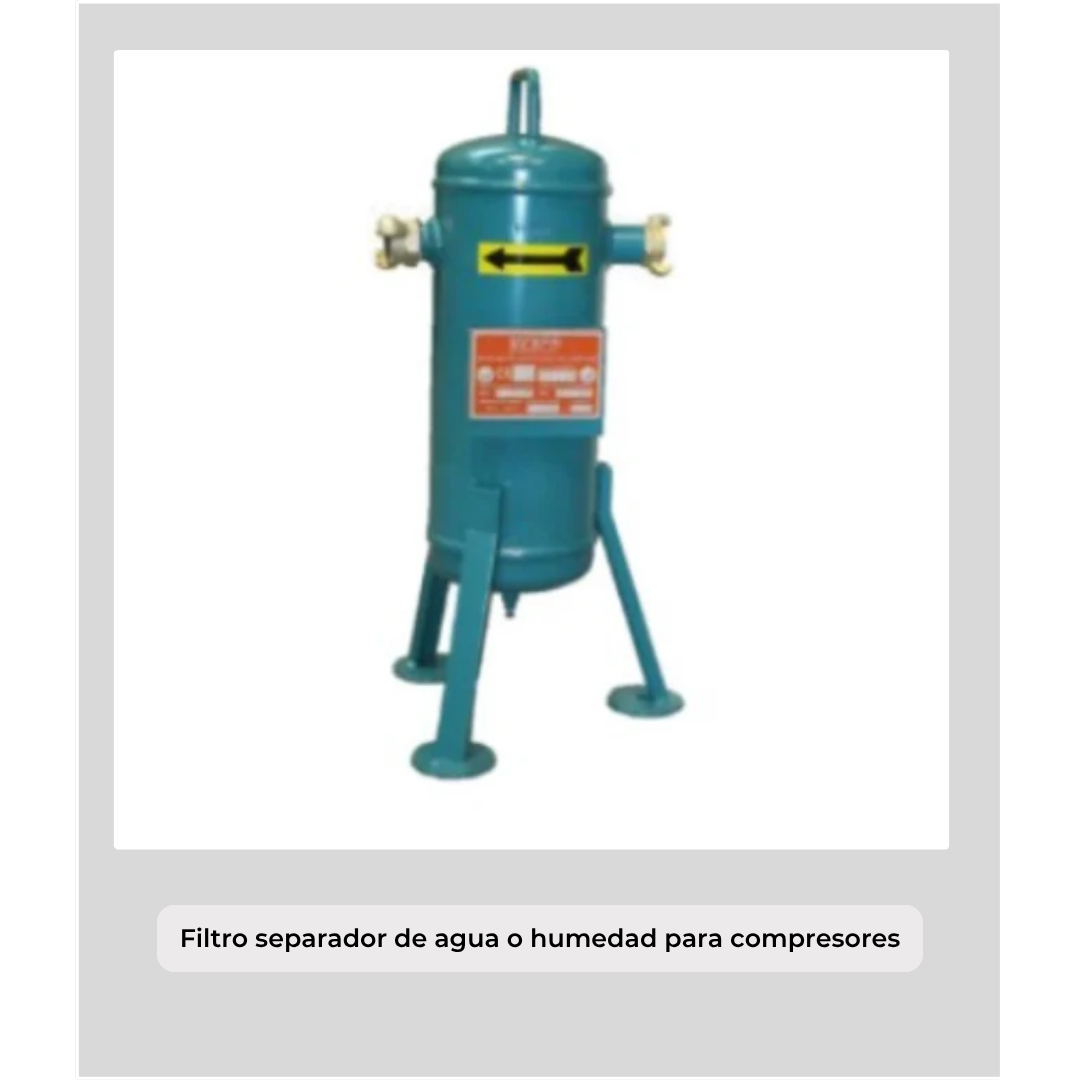
Water Separator Filter for Compressors
One way to reduce the presence of water in the air line is to install a water separator filter for compressors before the blasting equipment.
The separator filter available from Jomar acts as a moisture and water separator, helping to prevent water carried by the compressed air from reaching the blasting machine.
It is a relatively simple component within the installation, but it can help achieve a more stable abrasive feed and fewer interruptions during operation.
For abrasive blasting, we need two things from compressed air: sufficient volume and the correct air conditions.
2. Working with a Worn Nozzle or Using the Wrong Diameter
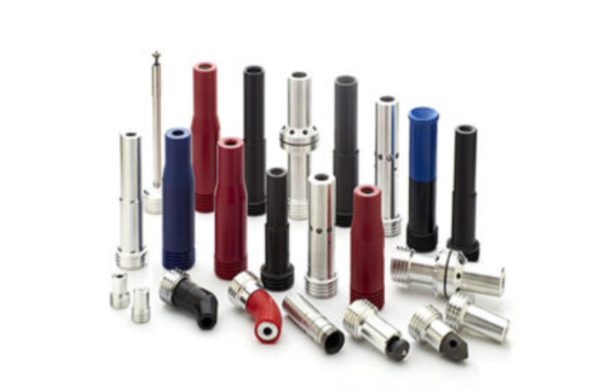
The blasting nozzle is a relatively small component, but it has a major influence on the performance of the entire system.
During blasting, the abrasive passes through the nozzle at high speed. This flow causes progressive wear to its internal diameter.
This can create a problem that may initially go unnoticed.
A Worn Nozzle Can Increase Air Consumption
As the internal diameter increases due to wear, the amount of air required to maintain the same operating conditions also increases.
If the compressor does not have sufficient capacity to supply this larger diameter, a pressure drop may occur.
As a result, a blasting machine that previously worked correctly may gradually begin to lose performance without there being any fault in the equipment itself.
It is therefore advisable to regularly check:
- Internal nozzle diameter.
- General condition.
- Wear.
- Blast pattern.
- Compatibility with the abrasive.
- Required air consumption.
Does a Larger Nozzle Always Provide Greater Productivity?
Another problem that can arise in relation to the abrasive blasting nozzle is choosing the wrong size.
A larger-diameter nozzle can provide greater blasting capacity, but only if the rest of the installation can supply the required airflow.
When selecting the nozzle size, the other components involved in the blasting process must also be considered, including the hose, blasting machine, compressor and abrasive.
3. Choosing the Wrong Abrasive for the Surface
Another common mistake is assuming that all abrasives perform essentially the same function.
In reality, the choice of abrasive has a direct influence on cleaning speed, consumption and the resulting surface finish.
There is no universal abrasive that is the best choice for every application.
To select the right abrasive, factors such as the following must be considered:
- Surface material.
- Type of contamination or coating to be removed.
- Abrasive hardness.
- Particle shape.
- Particle size.
- Operating pressure.
- The surface profile to be achieved.
- Whether the abrasive can be reused.
The Goal Is Not Always to Remove Material as Quickly as Possible
For example, preparing a metal structure with severe corrosion requires a very different approach from cleaning stone, wood or a delicate surface.
An excessively aggressive abrasive can damage the substrate.
However, using an abrasive that is too mild for a demanding application may require additional passes, increase consumption and considerably reduce productivity.
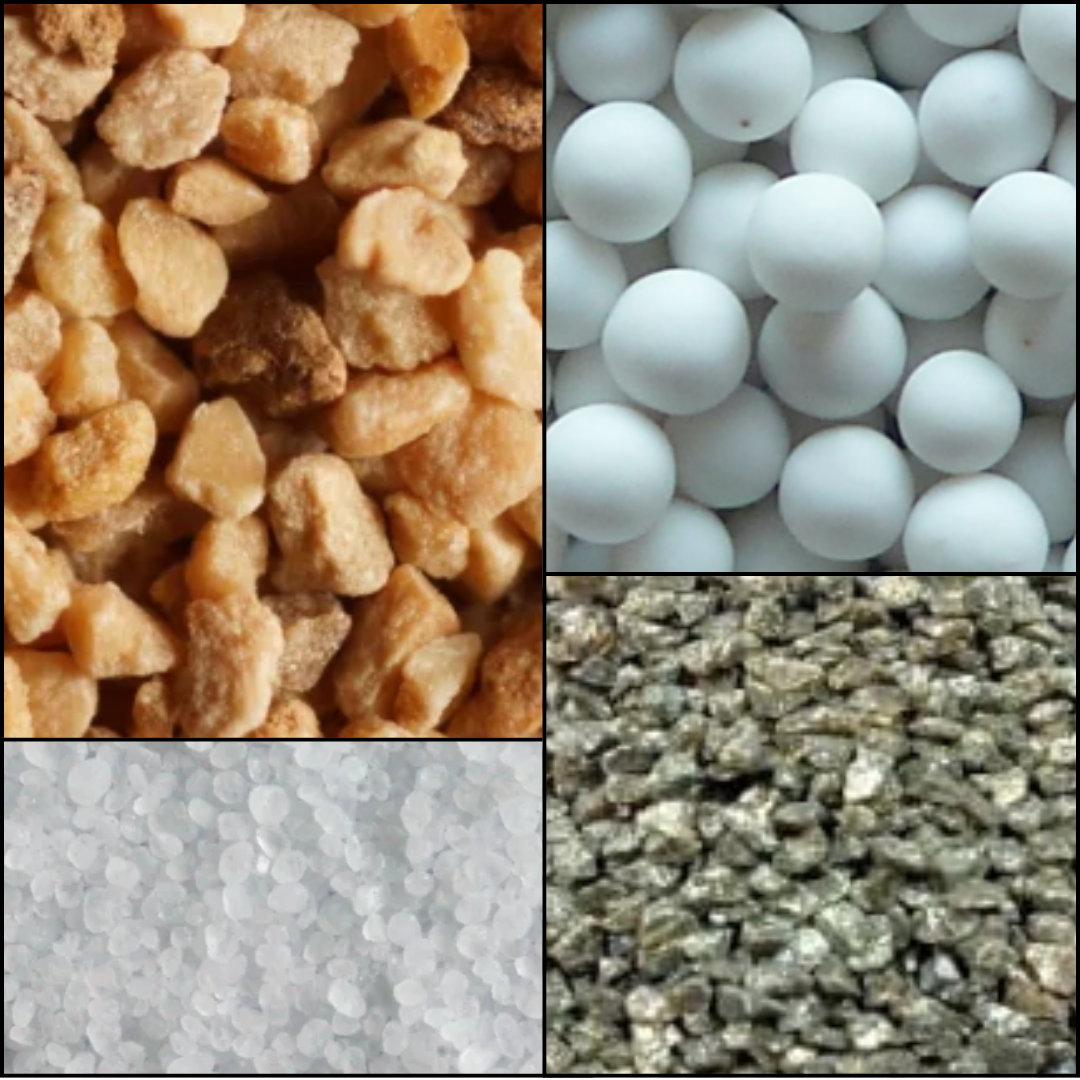
At Jomar, we offer different types of abrasives and blasting media to suit a wide range of applications, including:
Garnet, widely used for surface preparation and cleaning.
White and brown aluminium oxide, suitable for applications requiring high abrasive performance.
Glass and ceramic beads, when a specific surface finish and more controlled blasting action are required.
Sodium bicarbonate, for specific applications requiring less aggressive cleaning.
Walnut shell, used for certain applications on sensitive materials.
Round and angular steel shot, particularly suitable for industrial applications on metal surfaces.
Particle Size Also Changes the Result
Choosing the correct material is not enough. Particle size influences aggressiveness, cleaning speed and the resulting surface profile. Therefore, both the type of abrasive and its particle size must be considered. The appropriate abrasive should be selected according to the result we want to achieve.
4. Assuming That Higher Pressure Is Always Better
There is a natural tendency to associate higher pressure with greater productivity.
However, in abrasive blasting, the maximum available pressure is not necessarily the correct working pressure.
The configuration must be adapted to the surface, abrasive and desired result.
A metal structure with significant corrosion may require a very different treatment from that required to clean a façade, stone, wood or any other sensitive substrate.
Working at excessive pressure can cause:
- Damage to delicate surfaces.
- An excessively aggressive surface profile.
- Higher consumption.
- Loss of control during cleaning.
Conversely, working at insufficient pressure for a demanding application can considerably increase the time required to complete the job.
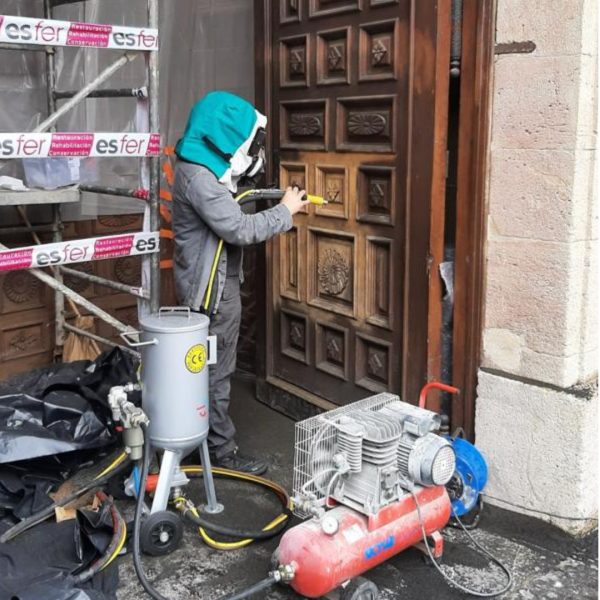
Low-Pressure Blasting Equipment
When greater control over the surface is required, low-pressure blasting systems make it possible to better adjust the intensity of the treatment.
For example, the 20-litre adjustable low-pressure blasting machine available from Jomar can operate at reduced pressures and allows the working conditions to be adjusted according to the substrate and abrasive being used.
This type of solution is particularly useful for applications where preserving the surface is just as important as removing dirt or the existing coating.
In short, the aim is not to use the highest possible pressure, but the correct pressure.
5. Focusing Only on the Blasting Machine Instead of the Complete System
This is probably the mistake that encompasses all the previous ones, because a blasting machine does not operate in isolation. Final performance depends on the combination of all the components: compressor, air treatment, blasting machine, hose, nozzle, abrasive and working pressure.
We may have an excellent blasting machine and still obtain poor performance if the compressor does not provide sufficient airflow. We may have enough air but experience problems because there is moisture in the line. We may have a perfectly sized installation and lose productivity because of a worn nozzle. And we may have everything correctly configured but still obtain an unsuitable result because we have selected the wrong abrasive.
Therefore, when performance problems occur, it is advisable to analyse the complete system before replacing components or simply increasing the pressure.
How to Improve the Performance of Abrasive Blasting Equipment
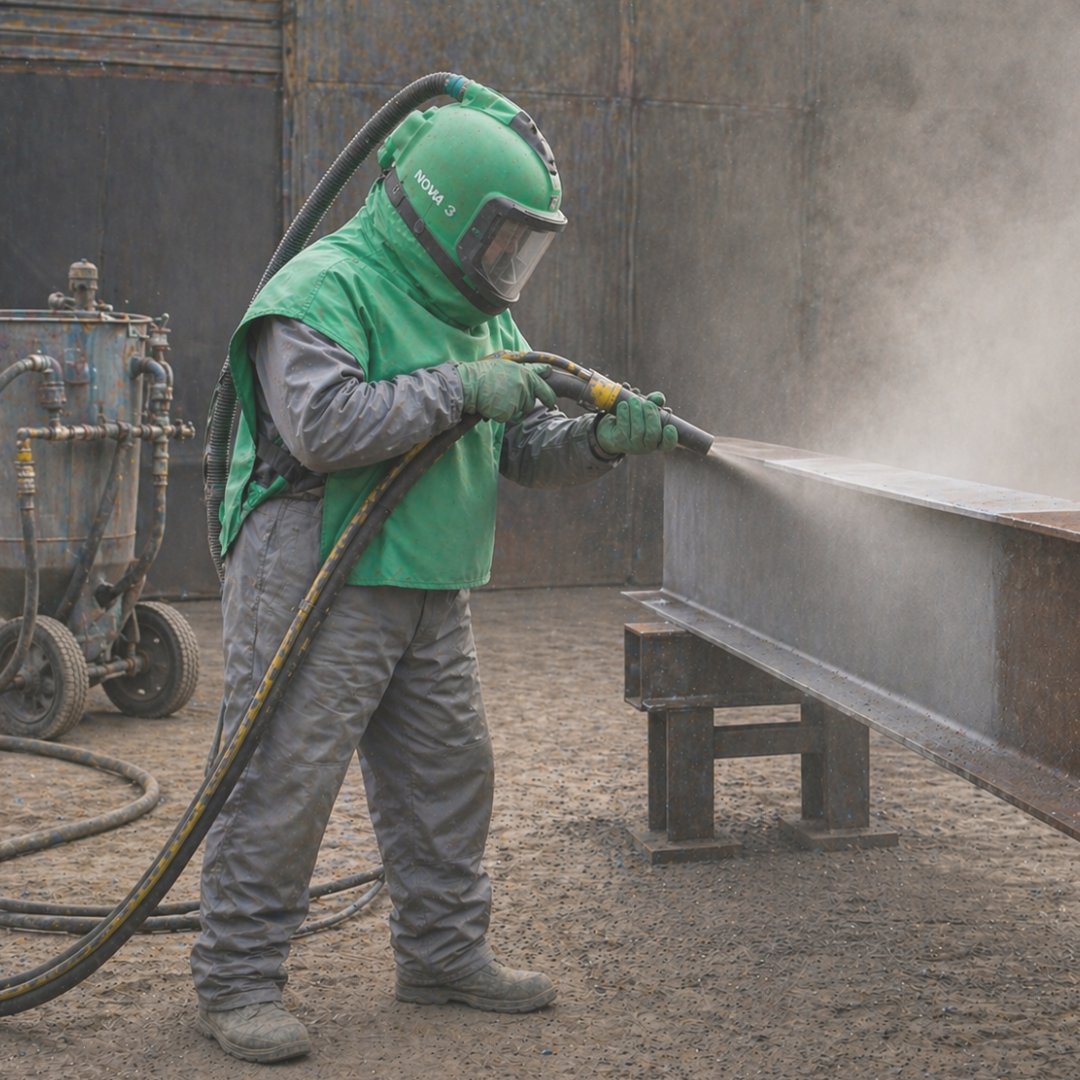
There is no single configuration suitable for every application.
Before starting a job, we need to know three fundamental aspects:
What we want to remove, the surface we are going to work on and the finish we need to achieve.
From there, we can select the abrasive, determine the appropriate pressure, select the correct nozzle size and check that the compressor provides the required airflow.
A correctly sized configuration makes it possible to:
- Improve productivity.
- Reduce interruptions.
- Control abrasive consumption.
- Avoid abrasive feed problems.
- Extend the service life of certain components.
- Achieve a more uniform surface finish.
- Reduce unnecessary working time.
Good Surface Preparation Starts with the Right Configuration
Abrasive blasting is one of the most effective systems for cleaning, stripping and surface preparation, but its performance depends both on the equipment and on how the complete system is configured.
Small details such as a worn nozzle, moisture in the compressed air or an incorrect abrasive particle size can have a considerable impact on productivity.
At Jomar, we offer pressure and low-pressure blasting machines, specialised blasting systems, abrasives and blasting media, nozzles, hoses, filters, spare parts and protective equipment to configure complete surface treatment solutions.
In addition, our technical team can help you determine which configuration is best suited to the requirements of each application.
Is your blasting machine losing performance, consuming too much abrasive or failing to achieve the finish you need? Contact us and we will help you find the right configuration for your application.
Share on

